
Best Porcelain Square Bowls for Salad, Pasta, and Side Dishes
Featured Snippet: The best porcelain square bowls for salad, pasta, and side dishes are crafted from high-fired, non-porous porcelain, offering a capacity between 30 to 45 ounces for main courses, and

Featured Snippet: The best porcelain square bowls for salad, pasta, and side dishes are crafted from high-fired, non-porous porcelain, offering a capacity between 30 to 45 ounces for main courses, and 15 to 25 ounces for side dishes. Square bowls provide a modern, elegant aesthetic while maximizing dining table space. When selecting the ideal square bowl, prioritize features such as chip resistance, microwave and dishwasher safety, and a wide, shallow base that beautifully presents culinary creations without spilling.
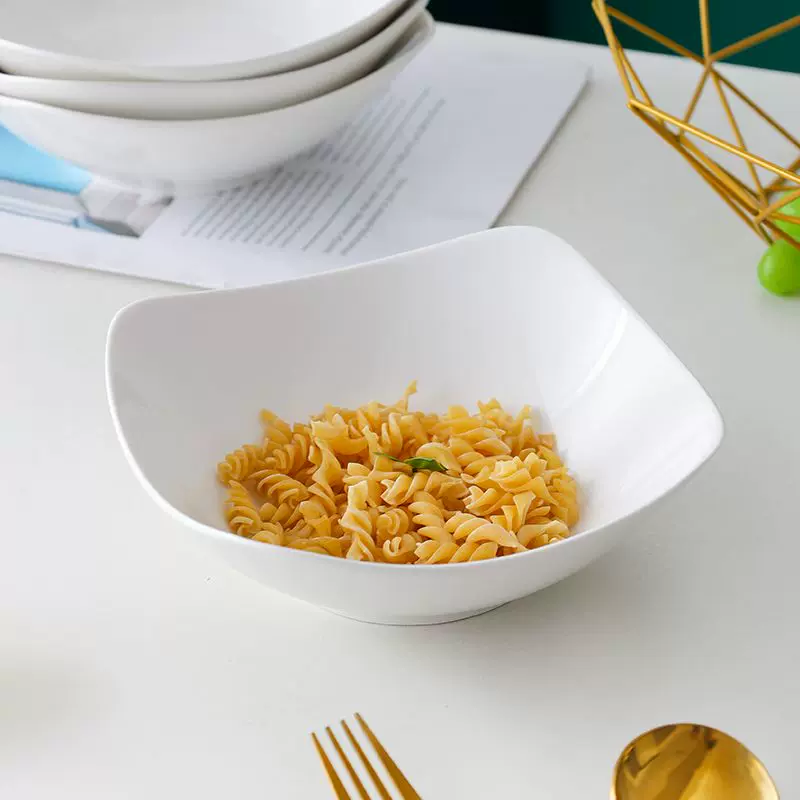
Table of Contents
- Why Choose Porcelain Square Bowls for Your Table?
- Perfecting the Pasta Experience: Square Pasta Bowls
- Crisp and Fresh: The Ideal Square Salad Bowls
- Serving Side Dishes in Style
- Key Features to Look For: A Comparison Guide
- Expert Care and Maintenance for Porcelain Dishware
- Frequently Asked Questions (FAQs)
Why Choose Porcelain Square Bowls for Your Table?
In the evolving landscape of culinary presentation, the vessels you choose to serve your meals in are just as important as the ingredients themselves. Porcelain square bowls have surged in popularity among professional chefs and home cooks alike. Unlike traditional round dishware, square bowls bring a striking geometric contrast to the dining table. They serve as a blank, angular canvas that naturally draws the eye toward the center of the dish, framing the food like a piece of contemporary art. For a brand dedicated to ceramic excellence like Cerlum, the shift toward angular dinnerware represents a perfect marriage of form and function.
Beyond their striking visual appeal, square bowls are incredibly practical. Their straight edges allow them to be aligned flush against one another, maximizing spatial efficiency in your cabinets and on crowded dining tables. Whether you are hosting an elaborate holiday feast or enjoying a simple weeknight dinner, the structural integrity and aesthetic versatility of these angular pieces elevate the overall dining experience.
The Modern Aesthetic: Square vs. Round
The debate between square and round dinnerware often comes down to the desired ambiance of the dining environment. Round bowls offer a classic, traditional feel, but square bowls are inherently modern, sleek, and sophisticated. The crisp lines of a square serving bowl provide a structural juxtaposition to the organic, flowing shapes of food—such as a tangled mound of spaghetti or loosely tossed salad greens. This contrast enhances visual appeal, making meals look restaurant-quality.
Furthermore, square dishware seamlessly integrates into minimalist and contemporary interior designs. When setting a table, the geometric uniformity allows for creative, symmetrical arrangements. Plating experts frequently utilize the corners of square bowls to rest garnishes or utensils, a functional design element that round bowls simply cannot accommodate.
The Superiority of High-Fired Porcelain
Not all ceramics are created equal. When searching for the best bowls for your daily use or special occasions, high-fired porcelain stands head and shoulders above standard stoneware or earthenware. Fired at temperatures exceeding 1,300°C (2,372°F), porcelain undergoes vitrification, a process that renders the material completely non-porous and glass-like in its density. This means that high-quality porcelain bowls will not absorb moisture, food odors, or bacteria, ensuring absolute hygiene and food safety.
Additionally, the vitrification process makes the bowls exceptionally chip-resistant and durable. While they look delicate and refined—often characterized by a brilliant, translucent white finish—they are robust enough to withstand the rigors of commercial kitchens. They safely transition from the microwave to the table, and finally to the dishwasher, without degrading in quality or losing their luminous glaze.
Perfecting the Pasta Experience: Square Pasta Bowls
Serving pasta requires a very specific type of bowl—one that acts as a hybrid between a deep plate and a traditional bowl. Square pasta bowls are uniquely suited for this task. The broad, flat base of a square bowl allows long noodles like linguine and fettuccine to spread out gracefully rather than clumping together in a deep well. This horizontal spread ensures an even distribution of sauces, from rich Bolognese to delicate aglio e olio, allowing every bite to be perfectly coated.
Moreover, the distinct corners of a square pasta bowl act as an excellent resting place for garlic bread or a serving spoon. The gentle slope of the sides provides enough resistance to easily twirl pasta onto a fork without chasing it around the dish, creating a more enjoyable and ergonomic dining experience.
Depth and Width Considerations for Sauces
When selecting a square pasta bowl, the ratio of depth to width is paramount. The ideal dimension usually hovers around an 8 to 9-inch diameter with a depth of 1.5 to 2 inches (yielding roughly a 30 to 40-ounce capacity). If the bowl is too shallow, heavy cream sauces or brothy seafood pastas risk spilling over the edge. If it is too deep, the presentation suffers, and the meal feels more like a soup.
The right architectural balance keeps the sauce pooled at the bottom while allowing the vibrant colors of the ingredients to remain visible. High-quality porcelain beautifully highlights the deep reds of tomato sauces and the vibrant greens of fresh basil, creating a visually appetizing contrast against a pure white background.
Heat Retention for Warm Meals
One of the most overlooked benefits of premium porcelain is its excellent thermal mass. Because pasta dishes cool rapidly once plated, maintaining the temperature is crucial for the optimal tasting experience. High-fired porcelain retains heat exceptionally well. By briefly warming your square porcelain bowls in the oven or under hot water before plating, you can ensure that your carbonara or ravioli remains piping hot from the first bite to the last.
Crisp and Fresh: The Ideal Square Salad Bowls
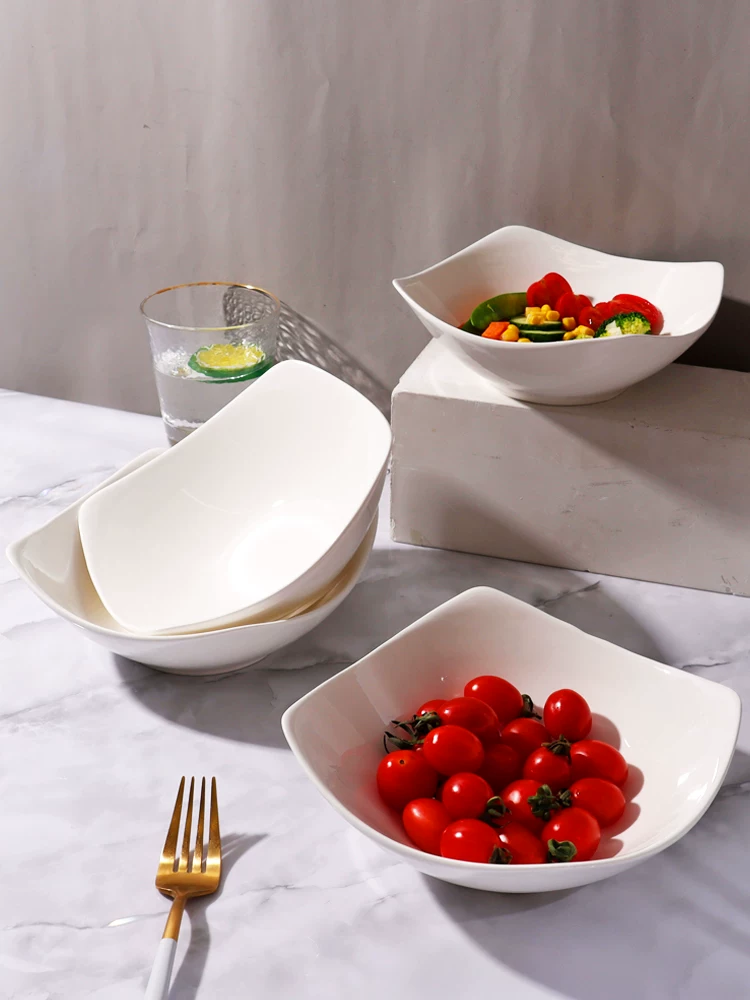
Salads, whether acting as a vibrant appetizer or a hearty main course, require space and breathability. Square salad bowls provide an expansive surface area that prevents delicate greens from being crushed under the weight of heavier toppings like nuts, cheeses, or proteins. The sharp, clean lines of the bowl present leafy greens, vibrant tomatoes, and colorful vinaigrettes in a way that feels fresh and inviting.
Porcelain is naturally cool to the touch, which makes it the ultimate material for serving chilled foods. Serving a crisp Caesar or a refreshing summer fruit salad in a chilled porcelain square bowl ensures that the ingredients remain crisp and the dressings do not separate or warm up prematurely.
Toss Without the Spill: Ergonomic Design
Anyone who has tried to toss a salad in a shallow, improperly shaped bowl knows the frustration of ingredients spilling onto the counter. The best square salad bowls feature steep, slightly flared sides. This specific geometric design acts as a containment wall. When you use salad tongs to lift and fold the greens, the angular corners help guide the ingredients back into the center of the bowl.
This ergonomic advantage is particularly beneficial when mixing emulsions or heavy dressings. The deep corners allow the dressing to pool slightly at the edges, making it easier to scoop up and redistribute over the salad, ensuring an even coating of flavor throughout the dish.
Individual Portions vs. Large Serving Bowls
When curating your dinnerware collection, it is wise to invest in both individual-sized square bowls and larger, communal serving bowls. Individual square salad bowls typically hold between 20 to 28 ounces, providing ample room for a side salad without overcrowding a dinner plate. They offer a refined, personalized touch to formal dinner parties.
Conversely, a large square serving bowl (often holding 60 ounces or more) becomes a stunning centerpiece. Its commanding geometric presence anchors the dining table. Because of the space-saving nature of straight edges, a large square serving bowl can sit neatly alongside rectangular platters and square dinner plates, creating a cohesive and beautifully organized tablescape.
Serving Side Dishes in Style
Side dishes—from roasted root vegetables and mashed potatoes to steamed asparagus—often play second fiddle to the main course. However, presenting them in elegant porcelain square bowls instantly elevates their status. Smaller square bowls, typically in the 15 to 20-ounce range, are indispensable for family-style dining.
Their modular design is their greatest asset when serving multiple sides. You can arrange three or four square side bowls in a perfect grid or a straight line down the center of a rectangular dining table. This tidy arrangement prevents the cluttered, chaotic look that often occurs when mixing and matching various round bowls. Furthermore, the sturdy nature of porcelain ensures that hot sides stay warm, while the glazed, non-stick surface makes serving gooey macaroni and cheese or sticky glazed carrots effortless.
Key Features to Look For: A Comparison Guide
To help you make an informed decision when purchasing your next set of dinnerware, we have compiled a matrix of the crucial features you should evaluate. Not all square bowls perform the same, and understanding the specifications will ensure you select a product that aligns with your culinary needs.
| Bowl Type | Ideal Capacity | Best Culinary Uses | Design Nuances |
|---|---|---|---|
| Individual Pasta Bowl | 30 – 40 oz. | Spaghetti, Risotto, Stews | Wide, flat base; shallow depth (approx. 1.5″ – 2″). |
| Individual Salad Bowl | 20 – 28 oz. | Side salads, Soups, Cereal | Steeper walls to prevent spilling; easy to chill. |
| Side Dish Bowl | 15 – 25 oz. | Roasted vegetables, Mashed potatoes, Dips | Compact, stackable design for modular table arrangements. |
| Large Serving Bowl | 60+ oz. | Family-style pastas, Large tossed salads | Thickened rims for safe carrying; deep corners for mixing. |
Expert Care and Maintenance for Porcelain Dishware
While high-fired porcelain from trusted manufacturers like Cerlum is remarkably durable, proper care will ensure your square bowls last for generations. Fortunately, premium porcelain is virtually maintenance-free. Because the material is fully vitrified and non-porous, you do not need to worry about the bowls absorbing stains from heavily pigmented foods like beets, turmeric, or tomato pastes.
For daily cleaning, these bowls are completely dishwasher safe. However, to prevent physical chipping, load them so that the sharp corners do not violently clink against metal pots or glass during the wash cycle. If you encounter stubborn, baked-on food (such as crusted cheese from a baked pasta dish), simply soak the bowl in warm, soapy water for ten minutes; the smooth glaze will release the debris effortlessly without the need for abrasive scouring pads that could dull the finish over time.
Frequently Asked Questions (FAQs)
Are square bowls better than round bowls?
Neither shape is objectively “better,” as it depends on your functional needs and aesthetic preferences. Square bowls offer a modern look, better space optimization on the table and in cupboards, and distinct corners that are excellent for resting utensils and pouring liquids. Round bowls are classic and have no sharp corners to chip, though high-quality porcelain mitigates chipping risks in square designs.
Can porcelain square bowls go in the oven and microwave?
Yes, genuine, high-fired porcelain is highly thermally shock-resistant. It is perfectly safe for microwave use and can typically withstand oven temperatures up to 400°F to 500°F (always check the specific manufacturer’s guidelines). This makes them excellent for baking individual portions of macaroni and cheese or keeping dishes warm before serving.
How do I prevent my square porcelain bowls from chipping?
The key to preventing chips is buying high-quality, high-fired porcelain (which is inherently stronger than low-fired ceramics). When storing, do not stack them too high, and consider placing a paper towel or felt separator between the bowls. Be mindful of the corners when loading them into the dishwasher or setting them down on hard granite countertops.
Why do chefs prefer white porcelain for serving salads and pasta?
White porcelain acts as a blank canvas, offering the highest level of color contrast. It makes the vibrant colors of food—like the rich red of marinara sauce or the bright green of fresh arugula—pop visually. This contrast stimulates the appetite and elevates the overall presentation to a professional standard.